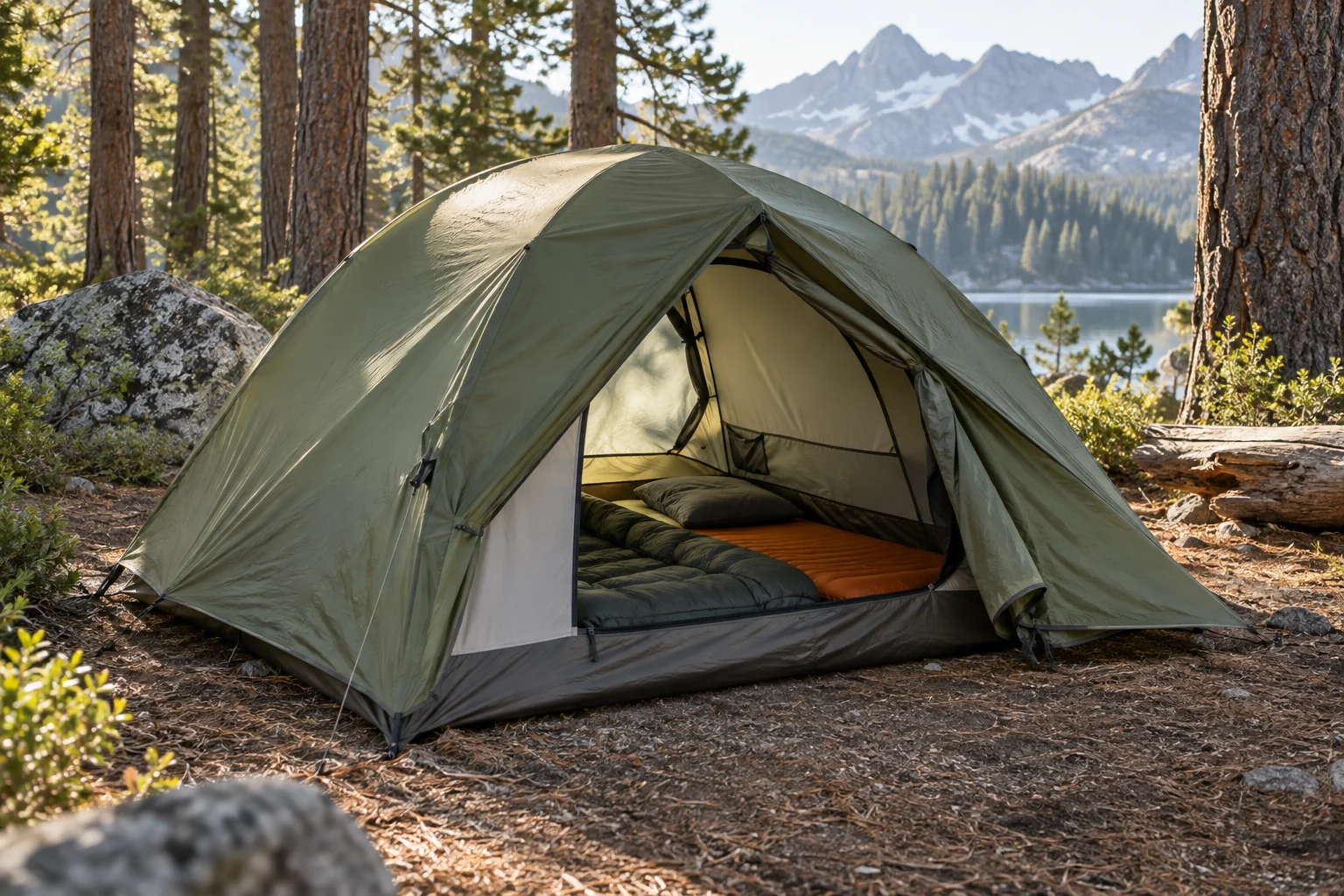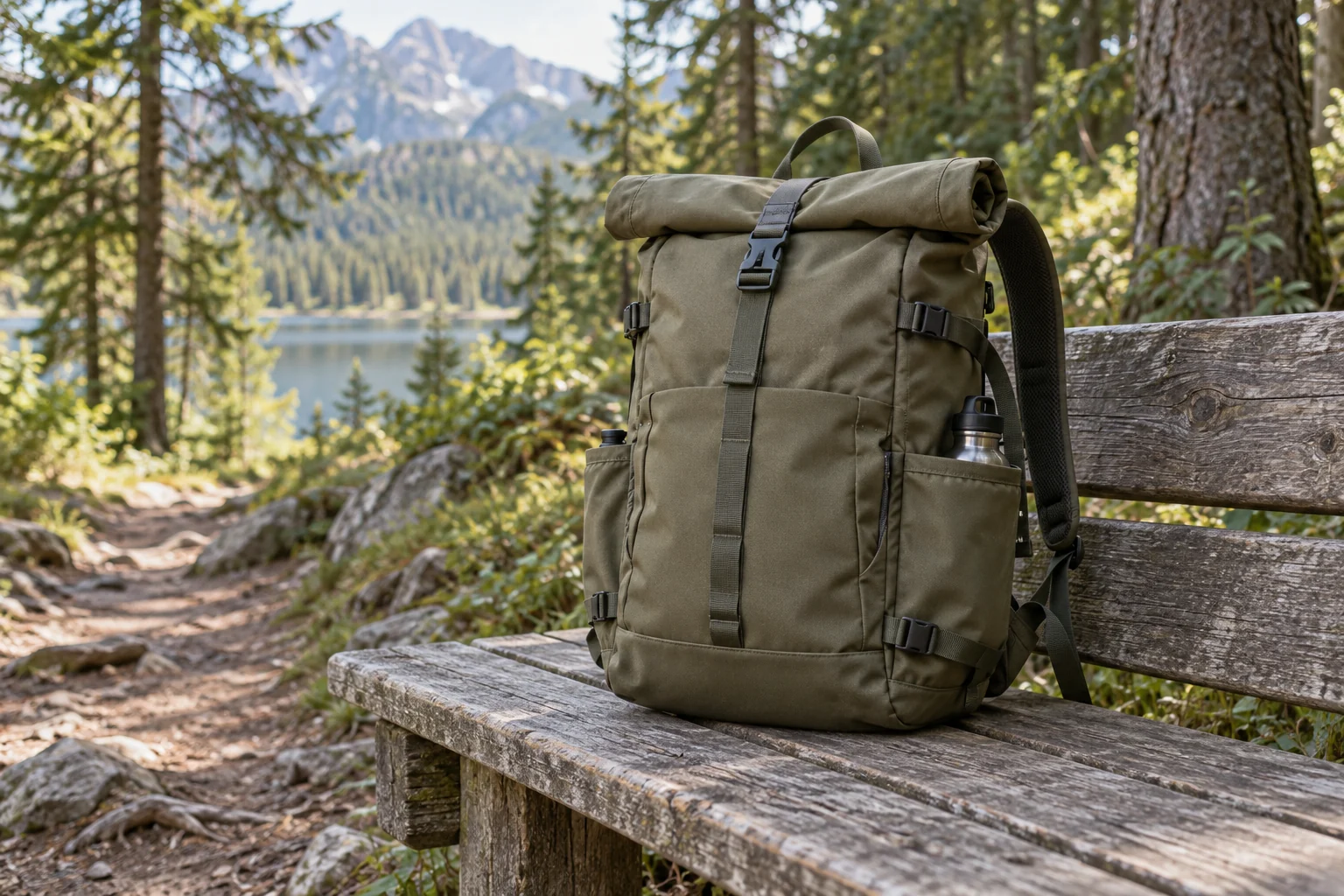
An outdoor fabric specification is the shared reference for appearance, construction and the conditions the product is expected to meet. It should be specific enough for a supplier to quote, and clear enough for a buyer to compare two offers.
Start with the product, not the adjective
Name the product first: tent fly, chair seat, sleeping-bag shell, backpack body or stuff sack. Then describe where that fabric sits and what it has to do. A water-resistant fly and a breathable inner tent are different briefs, even when both are called polyester.
What to write down
Composition and weave come first: fiber, denier or thread count, and whether the cloth is woven, knitted or laminated. Add the coating or membrane if one is required, and say which face it sits on. Color should be a reference, not only a name. Note reinforcement at stress points, and the hardware or tape that has to bond to the cloth.
If a performance level matters for the destination market, name the property and the test method you want used. Do not treat a general marketing word such as waterproof, durable or breathable as a specification on its own.
Keep construction with the fabric
Seam type, stitch density and seam sealing change how the fabric performs in the finished product. Include them when they affect leakage, strength or appearance. The same cloth can be acceptable in one construction and unsuitable in another.
Use the brief before you sample
Send the fabric points with the quantity, destination and the checks you want on the sample. Mark anything still open, such as a final color or a coating weight, so it is confirmed before bulk production rather than assumed.